Evidence built with the families it serves.
Black women in Canada are among the most affected by gaps in perinatal, reproductive and menopause care, and among the least studied. We are changing that, one study, one partnership and one shared dataset at a time.

When the data is missing, the care falls short.
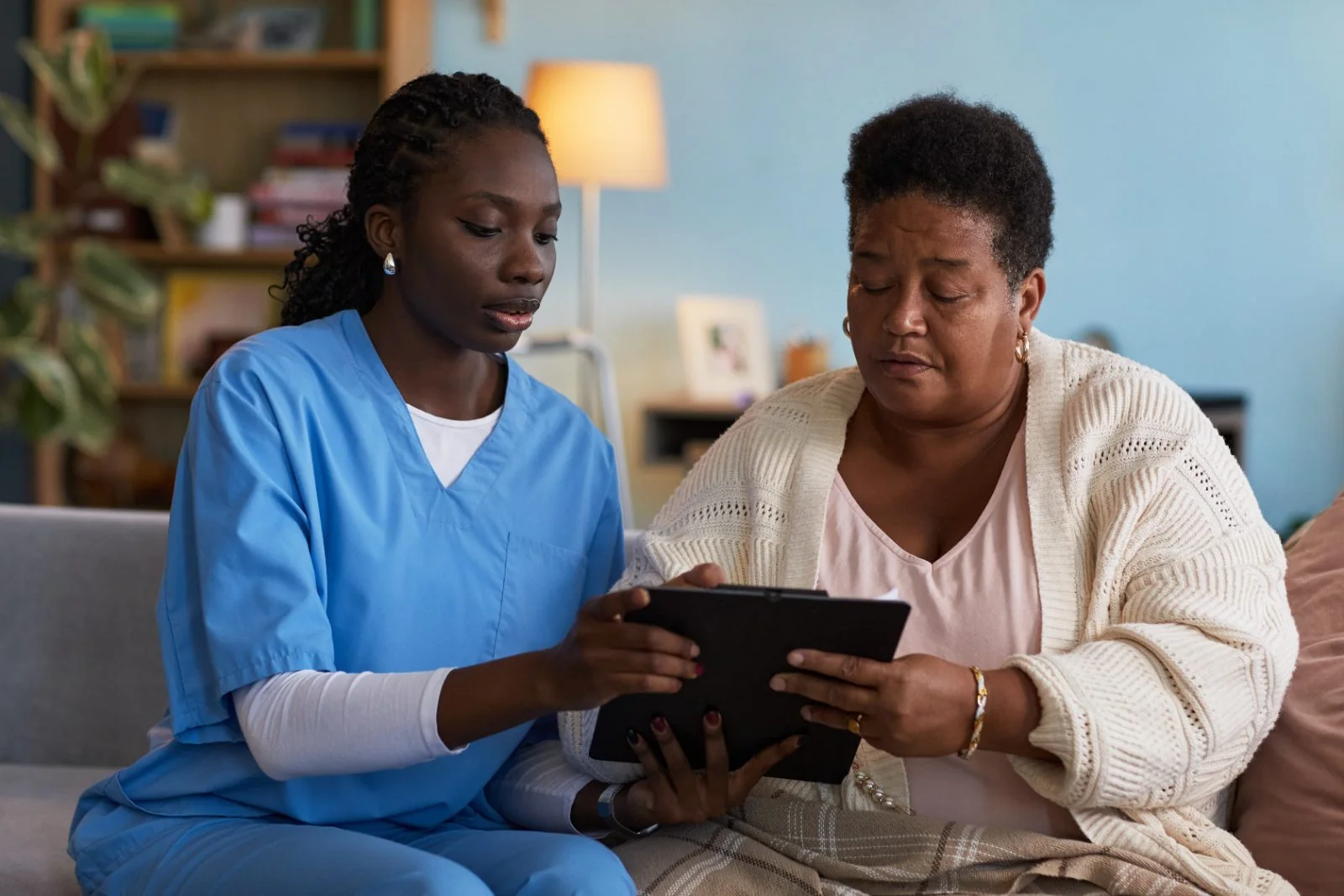
Black women deserve care shaped by evidence that reflects their lives. In Canada, that evidence is still too thin. Our research exists to close that gap. We study the perinatal, reproductive and menopause health of Black women across every stage of life: where the health system fails them, and what truly helps. Our focus extends to the experiences that shape their health and wellbeing, including mental health, racial trauma and obstetric violence, access to culturally safe care, and the social conditions, like income, food and childcare, that affect health long before a clinic visit.
We partner with universities, hospitals, community health centres and public health agencies. What we learn flows straight back into our care model and our advocacy.
Our research will always be used to push for policy change, so that Black women are seen, heard and served by the systems meant to care for them.
How we do the work matters as much as what we find.
Data equity
Black families have been missing from Canadian health data for too long. We collect race based data with consent and care, so their experiences are counted and seen.
Cultural safety
Participants should feel respected at every step. Our studies are designed and led by people who share their experiences, and every participant is connected to support.
Transformative action
Research is only useful when it changes something. Every finding is used to push for policy change and better care and practice.
Collaboration and community
Our questions come from the families we serve. We answer them alongside community organizations, clinicians and researchers.
Sharing what we have learned.
Listening to Their Voices
When the pandemic closed childcare centres and moved care online, we asked Black parents across Ontario what it was doing to their families. Across two phases and 294 survey responses, they told us.
Prepared for the Ontario Ministry of Health COVID 19 Challenge Questions Initiative, the study found that the pandemic did not create the pressures on Black families. It exposed and deepened them. Parents named income, food and childcare first. Many carried a heavy mental health burden with little support, and they wanted health information from Black health care professionals they could trust.
What parents told us shaped the care we deliver today: mental health support built into perinatal care, childcare hours in client care plans, a virtual first model and a directory of vetted, culturally safe care professionals.
Findings reflect an online survey of Black parents, mostly in the Greater Toronto Area, and are not drawn from a random sample.
Understanding the Perinatal Health Experiences of Black Women and Birthing Persons in Canada
Our next study looks beyond the pandemic to the full perinatal journey. Through a national survey and in depth interviews, we are asking Black women and birthing people who have given birth in Canada in the last ten years about their prenatal, birth and postpartum care: what worked, what harmed and what needs to change.
The study is conducted under formal research ethics review. Findings will advance policy efforts, inform communities and health care providers, and be shared openly through BCPHIN and on this page.
Would you like to take part, or hear when results are released?
Partner with us on research that changes care.
We work with academic institutions, health systems, funders and community organizations. If your work touches Black perinatal health, we would love to hear from you.